OUR PRODUCT
Search & Explore
affiliations


We offer
custom services
Our product is free and publicly available at tool.redoio.info—no fees, contracts, or setup required. We also provide custom research and development services in specialized cases such as:
privacy concerns
If you’re working with data under a sharing agreement—such as records from a Department of Corrections or local court—we can adapt our platform to process it securely and meet your privacy requirements.
DRILL DOWN
If you need analytics for a specific case or motion—for example, showing that Black defendants charged with carjacking in the 1990s received disproportionately harsh sentences—we can generate tailored analyses by race, charge, time period, and sentence length, using our datasets and any additional data you can provide.
What we Do
Manual and Excel-based analyses can get messy—we streamline and standardize the data science.
We process hundreds of cases in seconds—so you can prioritize what matters.
We help you advocate for fairness in justice by uncovering racial disparities in sentences.
We offer an open, free, and searchable database of individual level prison sentences. Our AI/ML models identify those serving excessive sentences for non-serious offenses, which we recommend to public defenders and district attorneys for second look case reviews. Using our racial bias analysis toolkit, attorneys can generate evidence of racial disparities in sentencing outcomes for prima face or discovery motions.
our board
Deputy Director, Three Strikes Project – Stanford Law
Professor of Law, Santa Clara University School of Law
Principal Research Associate, Urban Institute
highlights
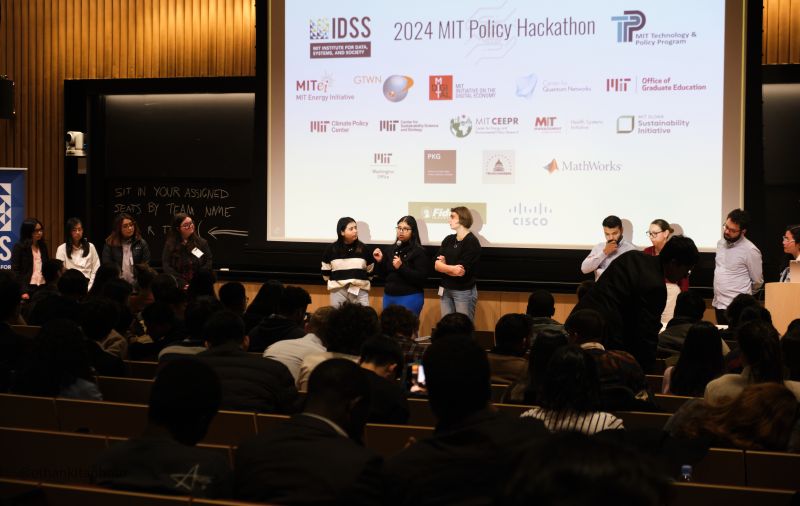
MIT TPP News | Nov 2024
Redo.io sponsored a legal AI challenge at MIT’s 2024 Technology and Policy Hackathon. Over 45 students competed in the 48-hour challenge to develop data-driven tools for California resentencing implementation.
Read More
LexLab, UC Law SF| Nov 2024
Redo.io secured a runner-up prize of $2,500 at the UC Law San Francisco’s 2024 Justice Technology Startup Accelerator hosted by LexLab, Village Capital, Dream.Org, among others.
Read More
Sam Bock | Relativity Blog | Feb 2025
Redo.io founder Aparna Komarla was featured in Relativity’s Women in Legal AI showcase. She argued that technology for criminal justice reform should be designed to build and nurture human connection rather than replace it.
Read More
Stanford Legal Design Lab | July 2025
Redo.io founder Aparna Komarla joined colleagues from OpenProBono at the International Conference on AI and the Law (ICAIL), demonstrating AI applications for the justice system.
Read More
MIT News | Nov 2024
redo.io sponsored a legal technology challenge at MIT’s 2024 Technology and Policy Hackathon. Over 45 students across…
Read More
@LexLabSF | Nov 2024
Our 2024 Justice Technology Accelerator wrapped this week with a successful Demo Day. Congratulations to @askthurgood for…
Read More
Sam Bock | Relativity Blog | Feb 2025
Redo.io creates open databases and data analytics tools to help study prison populations. Aparna emphasized the critical importance…
Read More
Margaret Hagan | Stanford Law | July 2025
Aparna Komarla from Redo.io and colleagues from OpenProBono demonstrated the power of open, configurable AI agents in the justice system…
Read More
People
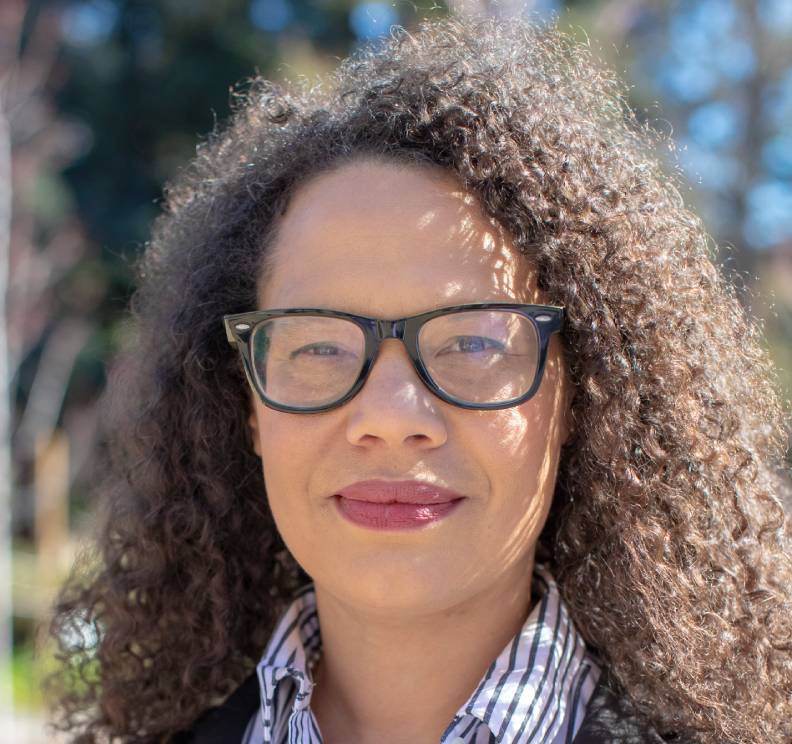
Aparna Komarla is the founder of Redo.io, where she leads the development of transparent AI systems for justice reform. Her work explores the application of human-computer interaction principles to high-stakes legal decisions. Previously, Aparna founded the COVID In Custody Project, leading a team of 60+ interns and volunteers to build a novel dataset on COVID in county jails. Her team exposed critical public health failures and contributed to the UCLA Law Behind Bars Data Project. Her op-eds have been featured in the San Francisco Chronicle, CalMatters, and Mercury News. Aparna has presented her work at ACM FAccT, the INFORMS, AI4A2J Workshop at the ICAIL and JURIX. She was featured in Relativity’s women in legal AI showcase.
Read More

Christine Head is an informatics Ph.D. student on a mission to build tech that truly works for people—especially those navigating social services. Drawing from her background in social work sociology, and disability studies, Christine explores how technology intersects with state systems and the real-world experiences of service providers. At UC Irvine, she’s part of the CREATE Lab and the Accessibility Research Collective, where she’s digging into trauma-informed design and rethinking how tech fits into the American welfare state. Before grad school, she worked hands-on in Chicago’s nonprofit world, focused on early childhood and youth impacted by the system.
Read More

Feedback
Criminal Justice Researcher